How Sensors and AI Are Making City Roads Safer and Smarter in 2026 Smart traffic signals cut crashes by 35% and AI detects accidents 60% faster. See how sensors, lidar, and AI are transforming city roads in 2026.
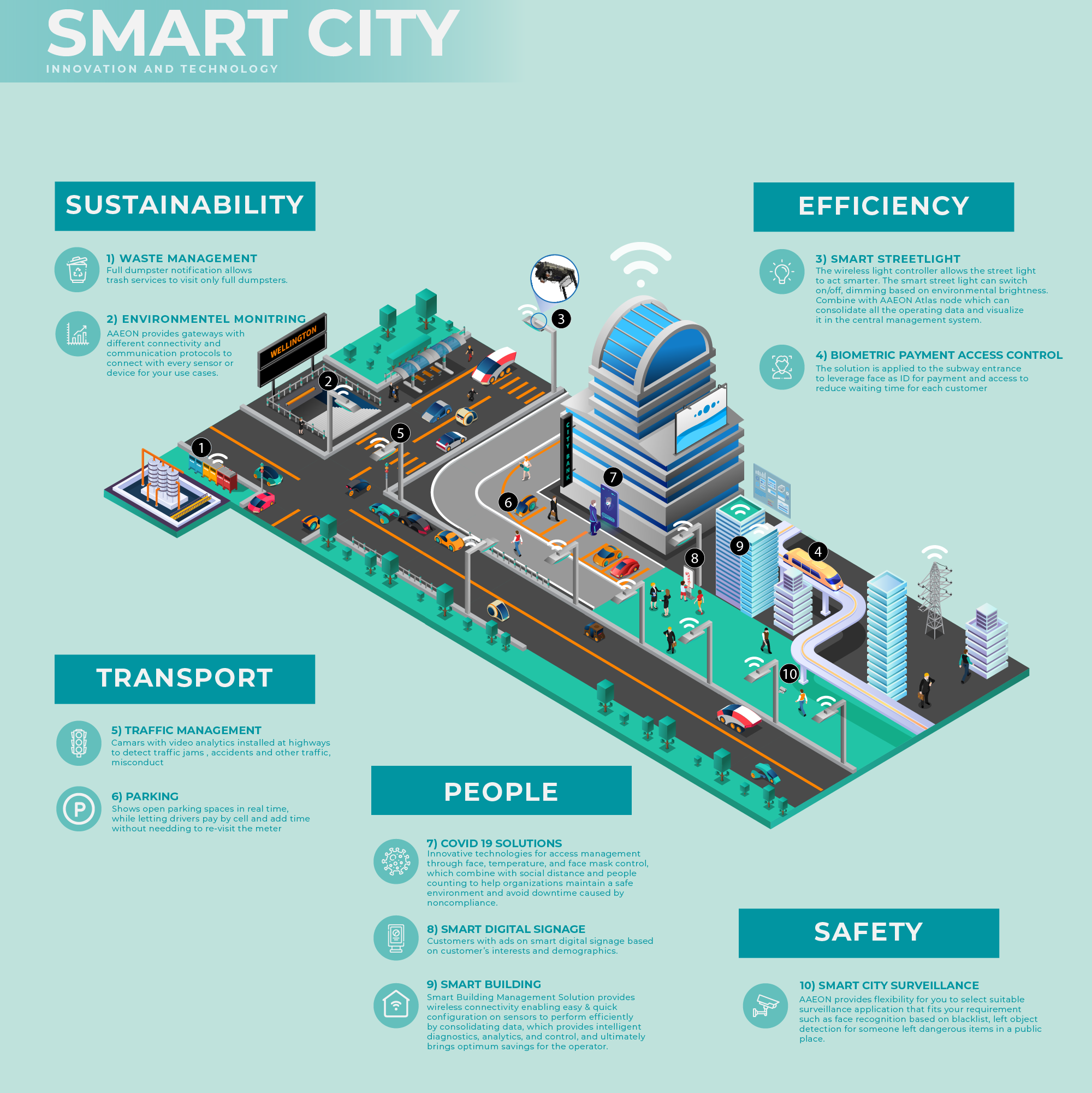
Quick Summary: City roads are getting a quiet but massive upgrade. Smart, AI-connected traffic signals can cut crashes at intersections by up to 35%, AI video analytics detect accidents up to 60% faster than traditional systems, and Alibaba’s traffic AI platform has already cut congestion by 15% while improving emergency response times by 50% in the cities where it operates. In 2026, the industry is shifting from scattered pilot projects to city-wide, always-on “Physical AI” infrastructure — lidar, V2X communication, and predictive analytics working together to make roads measurably safer.
Introduction: 2026 Is the Year Smart Roads Go Mainstream
For years, AI-powered traffic technology existed mostly as isolated pilot projects — a smart signal here, a sensor-equipped intersection there. That era is ending. <cite index=”14-1″>The Intelligent Transportation Systems (ITS) industry is undergoing a real transformation in 2026, with the conversation shifting from experimental pilots to the scalable, operational reality of “Physical AI” — the convergence of advanced sensing, edge computing, and artificial intelligence becoming a core, standard component of urban infrastructure.</cite>
The stakes are significant, both in safety and economic terms. <cite index=”14-1″>Traffic congestion cost the United States over $85 billion in a single recent year, with the typical driver losing 49 hours annually — a figure that skyrocketed to 112 hours lost per driver in cities like Chicago.</cite> On the safety side, progress is real but fragile — the same period saw a notable but modest decline in fatalities, underscoring how much further smart infrastructure needs to go. Here is exactly how sensors and AI are rewriting the rules of the road in 2026.
Smart Traffic Signals: Lights That Think
The most visible change on city streets is the traffic signal itself, which is no longer running on a fixed timer. <cite index=”18-1″>AI-powered smart traffic signals use sensors and cameras to detect cars, cyclists, and pedestrians and adjust light timing dynamically — instead of a fixed schedule, signals turn green or red based on actual real-time demand, helping prevent the backups and risky driver behaviors that lead to accidents.</cite>
<cite index=”18-1″>If pedestrians are waiting or a cyclist is detected in a bike lane, a smart signal can extend the walk phase or provide a protected turn, directly reducing conflict points. If an ambulance is approaching, connected signals can turn green ahead of it to clear a path automatically.</cite>
The safety payoff is measurable and significant. <cite index=”19-1″>When traffic flows better and signals respond in real time, crashes go down by as much as 35% — because most accidents happen at intersections, where drivers run red lights, make risky turns, or misjudge oncoming traffic. Smart systems reduce these situations by adjusting light timing, managing turn-signal phases, and detecting dangerous driver behavior before it results in a collision.</cite>
Case Study: <cite index=”18-1″>Pittsburgh’s SURTRAC smart signal network was one of the first real-world deployments of adaptive AI traffic signals in a major US city, using sensors and cameras to adjust light timing dynamically based on actual traffic and pedestrian conditions rather than a fixed schedule.</cite> External: Urban SDK
Lidar and Computer Vision: Seeing the Road in 3D
Behind the smart signals sits a sensing layer that is being fundamentally rebuilt. For decades, cities relied on simple inductive loops buried in the pavement to count cars — but that technology has hit its limits.
<cite index=”14-1″>Inductive loops only detect a vehicle’s presence at a single point, offering limited insight into the complex, multimodal reality of today’s streets, and are constrained by data scarcity and vulnerability to environmental factors. In 2026, cities are accelerating municipal programs dedicated to replacing this aging infrastructure — not merely as a technology upgrade, but as a genuine prerequisite for deploying effective AI models and achieving modern operational standards.</cite>
Lidar sensors are central to this shift, offering full 3D spatial awareness of an intersection rather than a single detection point. <cite index=”14-1″>For years, agencies tested individual lidar sensors at just one or two intersections within a municipality — but 2026 marks the transition toward city-wide, scaled deployment of this richer sensing infrastructure.</cite>
Case Study: <cite index=”15-1″>AI systems using computer vision and lidar sensors are now being deployed specifically to identify pedestrians near vehicle paths and trigger automatic braking — technology that transport companies report delivers 20 to 40% reductions in accident rates and 15 to 25% lower insurance premiums as a direct result.</cite> External: Digiqt AI Road Safety Report
AI Accident Detection: Cutting Response Time by More Than Half
Perhaps the most life-saving application of AI on city roads has nothing to do with preventing crashes — it is about responding to them faster once they happen.
<cite index=”19-1″>By analyzing video feeds and sensor data continuously, AI can spot accidents or breakdowns up to 60% faster than traditional systems, which typically rely on drivers calling emergency services or traffic control staff happening to notice something on a camera feed. AI does not wait — it watches for sudden stops, unexpected lane changes, and erratic driving, and flags these events immediately.</cite>
This speed matters enormously in practice, both for saving lives and for reducing the secondary congestion that a single unaddressed accident can cause across an entire road network.
Case Study: <cite index=”15-1″>Alibaba’s AI traffic platform optimizes signal timing, predicts congestion, and detects accidents instantly through a combination of surveillance cameras and IoT sensors. The system has reduced traffic congestion by 15% and improved emergency response times by 50% in deployment cities, setting what is widely regarded as a global benchmark for AI-driven smart city transportation.</cite> External: Digiqt AI Road Safety Report
V2X: Cars, Roads, and Pedestrians Talking to Each Other
The next frontier is connected vehicle technology, known as V2X (vehicle-to-everything) — a system where cars, road sensors, traffic signals, and even pedestrians’ smartphones communicate with each other in real time.
<cite index=”18-1″>V2X makes it possible for a car to receive a warning that a vehicle up ahead suddenly hit the brakes, or for a traffic light to “know” that a speeding car is about to run a red light and hold the crosswalk signal a few extra seconds as a result. The U.S. Department of Transportation sees major safety potential here, and has announced plans to accelerate V2X deployment nationwide, with a goal of equipping 20% of the National Highway System with V2X by 2028, alongside 25% of traffic signals in the top 75 US cities.</cite>
Case Study: Continental’s eHorizon platform uses AI to predict hazardous road conditions — sharp turns, inclines, and slippery surfaces — and shares that predictive data directly with connected vehicles on the network, allowing cars to prepare in advance and meaningfully reducing weather-related accident risk before a driver even perceives the danger. External: Digiqt AI Road Safety Report
The Startups Building the Infrastructure
A new category of infrastructure-focused startups is emerging specifically to supply cities with this sensing and AI layer.
<cite index=”20-1″>Miovision is the most heavily funded pure-play AI traffic company in the world, with its Scout platform providing intersection intelligence by using AI to process video feeds and extract structured traffic data that transportation agencies use directly for signal optimization and safety analysis.</cite>
<cite index=”20-1″>Flock Safety, which began in law enforcement technology, has expanded aggressively into traffic analytics — announcing a partnership with MS2 to bring AI traffic analytics to state transportation agencies, positioning it as a serious contender in the broader smart city infrastructure market through its network of AI-powered cameras capturing license plate data, vehicle descriptions, and traffic patterns across hundreds of cities. Vivacity Labs, meanwhile, is one of Europe’s leading AI traffic sensing companies, providing local authorities with multimodal traffic data from AI-powered sensors.</cite>
Comparison Table: Smart Road Technologies and Their Measured Impact
| Technology | Function | Measured Impact |
|---|---|---|
| AI Smart Traffic Signals | Dynamic light timing based on real demand | Up to 35% fewer intersection crashes |
| Lidar / Computer Vision Sensors | 3D detection of vehicles, cyclists, pedestrians | 20–40% fewer accidents, 15–25% lower insurance premiums |
| AI Video Analytics | Automated accident/incident detection | Up to 60% faster detection than manual reporting |
| V2X Connected Vehicles | Real-time data sharing between cars, signals, roads | Proactive collision prevention, weather-hazard alerts |
| AI Traffic Platforms (e.g. Alibaba) | Congestion prediction + signal optimization | 15% less congestion, 50% faster emergency response |
Sources: Ouster ITS 2026 Trends, PatentPC, Digiqt
Key Factors Driving the 2026 Smart Road Transformation
1. Old sensor infrastructure is being systematically replaced. <cite index=”14-1″>The industry mandate for 2026 is clear: cities are replacing single-point detection tools like inductive loops with richer, AI-ready sensing infrastructure — not as an upgrade, but as a genuine prerequisite for AI deployment.</cite>
2. The shift is from reactive to predictive. <cite index=”21-1″>Traffic management is moving away from reactive control toward predictive and simulation-driven decision-making, powered by advances in AI models and growing adoption of digital-twin technology at the city scale.</cite>
3. Vision Zero is the guiding policy framework. <cite index=”18-1″>Vision Zero is a nationwide effort to eliminate traffic deaths entirely by prioritizing safe street design, effective enforcement, and data-driven action — backed by AI analytics and public transparency in the cities that have adopted it.</cite>
4. Sustainability is now part of the safety mandate. <cite index=”21-1″>Under global carbon-reduction and sustainability goals, smart transportation in 2026 is no longer measured only by efficiency — it is increasingly measured by its environmental impact as well.</cite>
5. Government policy is accelerating deployment. The US DOT’s national V2X rollout targets and municipal sensor-replacement mandates show that 2026’s smart road transformation is being driven as much by coordinated policy as by private-sector innovation.
Conclusion: The Road Itself Is Becoming the Safety System
For most of automotive history, road safety depended almost entirely on the driver and the vehicle. In 2026, the road itself has become an active participant — sensing, predicting, and responding in real time. Smart signals that think, lidar that sees in 3D, AI that spots accidents in seconds, and vehicles that talk to the infrastructure around them are converging into a single, city-wide safety system. The technology is no longer experimental — it is becoming the baseline expectation for how modern cities operate.
Frequently Asked Questions (FAQs)
Q: How much do smart traffic signals actually reduce accidents? AI-powered adaptive traffic signals can reduce crashes at intersections by up to 35% by adjusting light timing in real time based on actual traffic, pedestrian, and cyclist conditions rather than a fixed schedule.
Q: How much faster can AI detect a road accident compared to traditional methods? AI video analytics systems can detect accidents or breakdowns up to 60% faster than traditional methods, which typically rely on a driver calling emergency services or a human noticing something on camera.
Q: What is V2X technology? V2X (vehicle-to-everything) is connected vehicle technology that allows cars, road sensors, traffic signals, and pedestrians’ smartphones to share data in real time — for example, warning a driver that a vehicle ahead has suddenly braked, or holding a crosswalk signal if a speeding car is detected approaching a red light.
Q: Why are cities replacing old traffic sensors in 2026? Older sensors like inductive loops only detect a vehicle’s presence at a single point and are limited by data scarcity and environmental vulnerability. Cities are replacing them with lidar and computer-vision sensors that provide richer, 3D data essential for accurate AI-based traffic and safety systems.
Q: What is Vision Zero? Vision Zero is a nationwide road safety initiative aimed at eliminating traffic deaths entirely, combining safe street design, targeted enforcement, and AI-driven, data-based decision-making, with public transparency built into the approach.
This post contains informational links only. No sponsored content included. Data sourced from Ouster, Digiqt, PatentPC, Urban SDK, and Traction Technology.
[← Related: How CERN’s Innovations Changed Everyday Life] ·
[← Global Startup Funding Report 2026]
[← Big Tech Layoffs 2026: A Complete Breakdown]
About The Author




1 thought on “How Sensors and AI Are Making City Roads Safer and Smarter in 2026”