The Rise of Solo Founders in 2026 | AI, Data & Real Case Studies: Discover why solo founders are dominating startups in 2026. Real case studies, data from Carta, AI tools, and strategies behind million-dollar one-person businesses.

Quick Summary: In 2026, over one-third of all new startups are founded by a single person. Solopreneurs now represent 41.8 million individuals in the United States alone, contributing over $1.3 trillion to the American economy. Powered by AI tools that cost less than $1,000 per month, solo founders are building million-dollar businesses, achieving $80 million exits, and racing toward what may become the world’s first one-person unicorn. This is not a fringe movement — it is the future of entrepreneurship.
Introduction: The Rules of Building a Company Have Changed Forever
For most of business history, building a company of any meaningful scale required one thing above everything else: people. Engineers to build the product. Sales teams to sell it. Marketers to promote it. Customer support agents to retain customers. Designers, analysts, accountants, and managers to hold it all together.
That assumption — that significant businesses require significant teams — is being dismantled in real time.
In 2026, a new generation of entrepreneurs is building software products, service businesses, and content empires entirely alone. They are not struggling freelancers scraping by. They are sophisticated operators generating millions in annual revenue with operating margins of 60–80%, working from laptops in home offices, coffee shops, and co-working spaces around the world.
According to data from Carta — one of the most comprehensive startup data platforms in the world — the share of new startups founded by a single person has risen from 23.7% in 2019 to 36.3% in the first half of 2025. That is a 13-point rise in just five years — a seismic shift in how companies get started.
And the force behind this shift? Artificial intelligence.
The Numbers: Solo Founding Is Now the Norm, Not the Exception
Before diving into the stories and strategies, it is essential to understand the scale of what is happening. These are not isolated anecdotes — they are documented trends backed by rigorous data.
- 36.3% of all new startups in H1 2025 were founded by solo founders — up from 23.7% in 2019, per Carta
- 41.8 million solopreneurs now operate in the United States alone, contributing $1.3 trillion to the American economy, according to Entrepreneur Loop
- 38% of seven-figure businesses as of early 2026 are led by solopreneurs who replaced traditional hires with AI-powered workflows, per Grey Journal
- 52.3% of successful startup exits were achieved by solo founders, according to Medium
- Among companies generating $1 million or more in annual revenue, the most common number of founders is one — accounting for 42% of such businesses, per Equidam
- A complete solopreneur tech stack in 2026 costs between $3,000 and $12,000 per year — a 95–98% cost reduction compared to hiring equivalent staff
- 300+ unicorn companies valued over $1 billion were founded by solo founders, including ByteDance ($140B), SpaceX ($127B), and Checkout.com ($40B), per Cipher Projects
These numbers tell a clear story: solo founding is not a compromise or a last resort. It has become, for millions of entrepreneurs, the deliberate choice of smart, ambitious builders who want speed, autonomy, and maximum ownership of what they create.
What Is Driving the Rise of Solo Founders?
The rise of solo founding has not happened by accident. Several powerful forces have converged simultaneously to make it not just possible, but in many cases preferable, to build alone.
1. AI Has Fundamentally Changed What One Person Can Do
The most obvious — and most powerful — catalyst is artificial intelligence. But as Solo Founders explains, AI is not simply making solo founders more productive in the conventional sense. It is fundamentally changing what productivity means for a single person.
A solo founder in 2019 might have needed weeks to build a functional prototype. Today’s AI-assisted founder can ship in hours or days. They are not just writing code faster — they are simultaneously crafting marketing copy, designing interfaces, analysing user data, and automating customer support. All from a single desk.
The tools making this possible include:
- Cursor — An AI-powered code editor that can generate, debug, and refactor code in seconds
- Claude and ChatGPT — For content creation, strategic thinking, customer emails, and product documentation
- Canva AI — For professional-grade design without a designer
- Zapier / Make — For automating repetitive workflows across dozens of platforms
- Notion AI — For project management, documentation, and knowledge base creation
- Stripe — For handling payments, subscriptions, and billing automatically
According to Entrepreneur Loop, businesses implementing AI tools expect 25–55% productivity increases, and generate approximately $3.50–$4.00 for every dollar spent on AI solutions. For a solo founder, these numbers are transformative.
2. The Cost of Starting Has Collapsed
Ten years ago, building a software product required hiring engineers, paying for servers, and maintaining development infrastructure that could cost tens of thousands of dollars before a single customer was acquired.
Today, cloud infrastructure is cheap and scalable. No-code and low-code tools allow non-developers to build functional products. AI coding assistants collapse development timelines from months to days. And distribution channels — social media, Product Hunt, LinkedIn, communities — are free.
The result: a complete solopreneur tech stack now costs between $3,000 and $12,000 per year. That number, compared to the cost of hiring even a single full-time employee, represents a revolution in startup economics.
3. The Success of Role Models Has Normalised the Path
Five years ago, building alone was viewed by many investors and peers as a red flag — a sign that a founder could not attract co-founders or team members. That perception is changing rapidly, driven by highly visible success stories that have proven the model works at serious scale.
As Carta’s Head of Insights notes: “I think being a solo founder has been normalised and feels more de-risked. People are investing in solo founders more often. In the past, a key reason not to be a solo founder was the belief that investors wouldn’t back you.”
4. The Demand for Autonomy and Ownership
For many solo founders, the motivation is not purely economic. It is about creative control, speed of decision-making, and complete ownership of what they build. Co-founder relationships — like marriages — are extraordinarily difficult. Disagreements over vision, equity, work ethic, and strategy are among the leading causes of early startup failure.
Solo founding eliminates that risk entirely. One vision. One decision-maker. One cap table entry.
Real-World Case Studies: Solo Founders Who Changed the Game
🧪 Case Study 1: Maor Shlomo — $80 Million Exit in Six Months, Built Alone
Founder: Maor Shlomo Company: Base44 Exit: Acquired by Wix for $80 million in June 2025
In December 2024, Israeli developer Maor Shlomo opened his laptop and started building. No co-founder. No seed round. No investors. No team Slack channel.
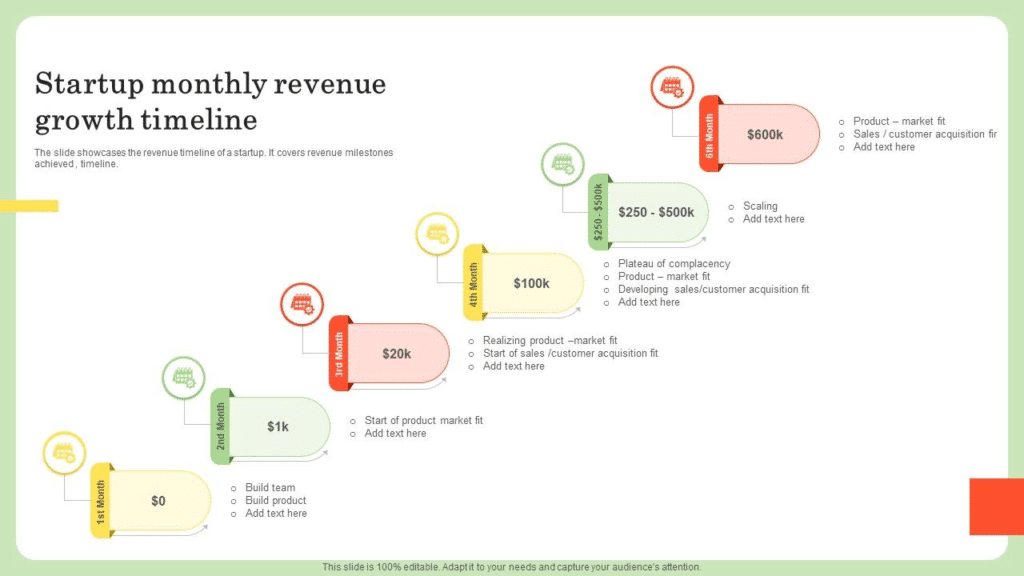
Six months later, Wix acquired his company, Base44, for $80 million in cash. The platform had 250,000 users, was generating $189,000 in profit in May 2025 alone after covering LLM token costs, and Shlomo was on track for an additional $90 million in earn-out payments.
He built it entirely alone, using AI coding tools and a lean stack of automation software. The total cost of his AI-powered development workflow was a fraction of what a traditional engineering team would have cost.
Key Lesson: Speed and focus beat headcount. Shlomo identified a narrow, specific pain point, built the simplest solution that worked, and scaled to a quarter of a million users before most teams would have finished their MVP roadmap.
🧪 Case Study 2: Danny Postma — $3.6 Million ARR, Solo Operation
Founder: Danny Postma Company: HeadshotPro Revenue: $3.6 million in annual recurring revenue — operated solo
Danny Postma built HeadshotPro — an AI-powered professional headshot generation service — entirely alone. According to Grey Journal, the business generates $3.6 million in annual recurring revenue as a fully solo operation, with no full-time employees.
Postma’s approach exemplifies the micro-SaaS model: identify a specific, recurring pain point (the need for professional headshots), build the leanest possible AI-powered solution, price it clearly, and let the product sell itself through word of mouth and SEO.
Key Lesson: Niche focus is a superpower. HeadshotPro does exactly one thing exceptionally well. It does not try to be everything to everyone. That specificity is what makes it scalable without a team.
🧪 Case Study 3: The $420K Revenue Design Agency — Built in 8 Months
Founder: Sarah Chen (documented by PrometAI) Business: AI-Powered Design Agency Revenue: $420,000 in annual revenue, working 25 hours per week
Sarah Chen launched an AI-powered design agency in January 2025 using just three tools: ChatGPT Plus, Canva Pro, and Zapier. Within eight months, she reached $420,000 in annual revenue while working 25 hours per week — well below the average full-time work schedule.
Her competitive advantage was not unique creative talent. It was implementation speed. She mastered her AI tools within 90 days while competitors spent months in analysis paralysis, and she delivered client work faster and more affordably than traditional design agencies could.
Key Lesson: Implementation speed is the real competitive moat in 2026. The tools are available to everyone — the winners are those who master them fastest and deploy them most effectively.
The Bold Prediction: Is the World’s First Solo Unicorn Coming?
Perhaps no statement has captured the imagination of the solo founder community more than a prediction made by Anthropic CEO Dario Amodei at the company’s Code with Claude developer conference in May 2025.
When asked when the first billion-dollar company with a single human employee would appear, Amodei’s answer was direct: “2026.” He gave it 70–80% odds, according to Solo Founders.
Amodei pointed to three specific business types where this was most likely: proprietary trading, developer tools, and businesses with fully automated customer service — all high-margin, software-native domains where AI agents can handle complex operations independently.
OpenAI CEO Sam Altman reportedly has a group chat with fellow tech CEOs where they are actively placing bets on when this milestone arrives. The consensus, according to Medium: not if. When.
The Solo Founder’s AI Toolkit: What the Best Are Using in 2026
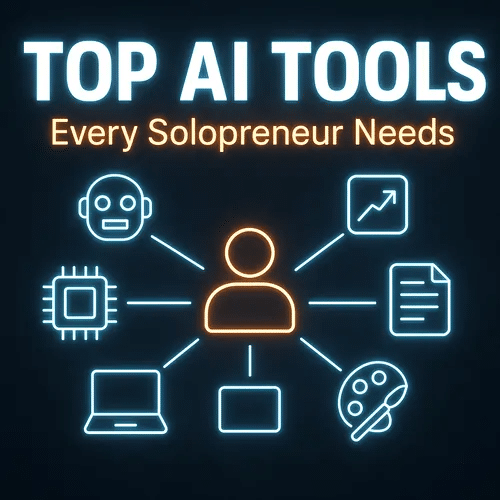
Based on documented practices of successful solo founders in 2026, here is the core tech stack that is powering million-dollar one-person businesses:
| Function | Tool | Monthly Cost |
|---|---|---|
| AI Coding Assistant | Cursor + Claude API | ~$40–$100 |
| Content & Strategy | ChatGPT Plus | $20 |
| Design | Canva Pro | $15 |
| Workflow Automation | Zapier or Make | $20–$100 |
| CRM & Sales | HubSpot Free / Pipedrive | Free–$15 |
| Email Marketing | MailerLite | Free–$25 |
| Payments & Billing | Stripe | % of revenue |
| Project Management | Notion AI | $10–$16 |
| Customer Support | Intercom AI / Tidio | $29–$50 |
| Total Stack Cost | $3,000–$12,000/year |
This stack replaces what would traditionally require a team of 5 to 10 people — at a 95–98% cost reduction. The operating margins that result — 60–80% — are simply not achievable in traditionally staffed businesses that average 10–20%.
The VC Bias Problem — And Why It Is Finally Shifting
Despite all the evidence in favour of solo founders, a significant gap persists in venture capital. According to Equidam, the majority of VC-backed companies — 37% — have two founders. Solo founders receive only 20% of VC-backed deals, despite representing 36.3% of all new companies.
Even more telling: while VCs prefer two-founder teams, the data shows that among companies generating $1 million or more in annual revenue, 42% have a single founder — the largest share of any team configuration. Two-founder teams account for only 33%.
This discrepancy, as Equidam puts it, suggests that VC preference for duos may be a self-reinforcing bias rather than a data-driven conclusion.
The funding gap is real — solo-led companies received only 14.7% of cash raised in priced equity rounds in 2024, per Carta. But importantly, the share of venture dollars going to solo founders is growing year on year. And many of the most successful solo-founded businesses — including HeadshotPro and Base44 — never needed venture capital at all.
Challenges Solo Founders Must Honestly Reckon With
The solo founder narrative is genuinely exciting — but balance demands acknowledging the real challenges that come with building alone.
Burnout Is a Real and Serious Risk
According to Entrepreneur Loop, over 54% of startup founders experienced burnout in the last twelve months, and 75% reported anxiety episodes during the same period. When there is no co-founder to share the burden, the psychological weight of every decision, setback, and slow period falls on a single person.
Building sustainable daily routines, setting hard boundaries on working hours, and investing in community and peer networks are not optional luxuries for solo founders — they are operational necessities.
The Skills Gap Is Real
Running a one-person business in 2026 requires competence across product development, marketing, sales, customer success, finance, and operations. AI tools can assist with all of these — but they cannot replace strategic judgment, taste, or the ability to spot what is not working.
Solo founders must be honest about where their genuine skill gaps lie and invest in learning, hiring specialist contractors, or building advisor relationships that fill those gaps.
Loneliness and Isolation
The absence of a co-founder or team means the absence of daily collaboration, creative friction, and shared wins. Many solo founders report that isolation is among the hardest aspects of the journey — particularly in the early months before there are customers, revenue, or community.
Investing in co-working spaces, founder communities, and peer accountability groups is not optional. It is infrastructure for sustained performance.
How to Start as a Solo Founder in 2026: A Practical Roadmap
Whether you are considering your first solo venture or looking to level up an existing one, here is a practical framework drawn from the evidence of what works.
Step 1 — Identify One Real Problem Start with a problem you experience personally and repeatedly. Authenticity of problem identification is the single greatest predictor of early traction. Do not start with a market size analysis — start with genuine frustration.
Step 2 — Validate Before You Build Talk to ten potential customers before writing a single line of code or creating a single product. Ask them how they currently solve the problem, what they pay for solutions today, and whether they would pay for yours.
Step 3 — Build the Leanest Possible MVP Use AI coding tools like Cursor, no-code platforms like Bubble or Webflow, and existing APIs to build the smallest version of your product that delivers real value. Ship in weeks, not months.
Step 4 — Charge From Day One Free users give you feedback. Paying customers give you a business. Price your product from the moment you have customers — even if it feels premature.
Step 5 — Automate Relentlessly Every hour you spend on a task that could be automated is an hour stolen from strategy, product improvement, and customer relationships. Build your automation stack from day one.
Step 6 — Build in Public Sharing your journey transparently — revenue numbers, lessons learned, failures included — is one of the most powerful distribution strategies available to a solo founder in 2026. It builds an audience, attracts early customers, and creates accountability.
Conclusion: The Greatest Democratisation of Leverage in History
The rise of solo founders in 2026 represents something historically significant. As Medium puts it: “We are witnessing the single greatest democratisation of leverage in human history.”
For the first time, the tools required to build, sell, and scale a meaningful business are available to anyone with a laptop, an internet connection, and a genuine problem to solve. The barrier to entry has never been lower. The ceiling has never been higher.
The world’s first solo unicorn may well emerge in 2026. Whether or not that milestone arrives on schedule, the trajectory is clear: the era of the solo founder has arrived, and it is only just beginning.
Frequently Asked Questions (FAQs)
Q: What percentage of new startups are founded by solo founders in 2026? According to data from Carta, over one-third (36.3%) of all new startups in H1 2025 were founded by a single person — up from 23.7% in 2019. This share is expected to continue rising through 2026.
Q: Can a solo founder build a million-dollar business with AI tools? Yes — and thousands already have. Examples include Maor Shlomo’s Base44 (sold to Wix for $80 million), Danny Postma’s HeadshotPro ($3.6M ARR), and Sarah Chen’s AI design agency ($420K revenue in 8 months). A full solopreneur AI stack costs $3,000–$12,000 per year and enables operating margins of 60–80%.
Q: What is the best AI tool for a solo founder in 2026? The most commonly used tools among successful solopreneurs include Cursor and Claude for software development, ChatGPT Plus for content and strategy, Canva Pro for design, and Zapier or Make for workflow automation.
Q: Do solo founders get venture capital funding? Solo-led companies received 14.7% of cash raised in priced equity rounds in 2024 — below their 30% share of all new companies. However, this gap is narrowing, and many of the most successful solo-founded businesses have been built entirely without venture capital through bootstrapping and AI-powered lean operations.
Q: Will there be a one-person billion-dollar company in 2026? Anthropic CEO Dario Amodei predicted at a May 2025 developer conference that the first billion-dollar company with a single human employee would emerge in 2026, giving it 70–80% odds. OpenAI’s Sam Altman has a group chat with tech CEOs actively betting on when this happens. The consensus is not if — but when.
This post contains informational links only. No sponsored content is included. All data is sourced from publicly available research by Carta, Equidam, Grey Journal, Entrepreneur Loop, Medium, and others.
[← Related: How Indian Startups Are Winning Global Markets in 2026]
[← Related: How To Build an Online Presence Using AI in 2026]
[← Related: Best Free AI Tools for Bloggers in 2026]
About The Author


One subtle counterpoint to the AI-cost math: those $3k–$12k/year tool stacks often ignore the AI inference cost from coding agents, which can silently run $500–$2k/month when you iterate aggressively. That is an invisible line item many solo founders miss until they look at their API bills. We explain how to keep a handle on that while still getting the benefit.