The State of AI Hardware: 2025 Market Report explores market trends, key players, AI chips, data centers, edge devices, and the future outlook shaping the global AI hardware industry.

Executive Overview: AI Hardware Reaches a Market Inflection Point
The State of AI Hardware: 2025 Market Report captures a defining moment for the global technology industry. Artificial intelligence has moved from experimentation to large-scale deployment, and hardware is now the primary bottleneck and differentiator. In 2025, demand for AI-optimized chips, systems, and infrastructure is reshaping semiconductor markets, cloud strategies, enterprise IT, and even consumer devices.
Unlike earlier waves driven mainly by GPUs, the AI hardware ecosystem in 2025 is far more diverse. Dedicated AI accelerators, NPUs, custom ASICs, and energy-efficient edge chips are now essential to meeting exploding compute demand. At the same time, governments, enterprises, and startups are competing to secure supply, reduce costs, and improve performance-per-watt.
This report provides a hybrid view—combining market analysis with accessible explanation—to help readers understand where the AI hardware market stands in 2025 and where it is heading next.
Market Snapshot: AI Hardware in 2025
By 2025, AI hardware is no longer a niche category—it is a core pillar of the global semiconductor industry.
Key Market Characteristics
- Rapid growth driven by generative AI and automation
- Strong concentration around a few dominant vendors
- Increasing vertical integration by cloud providers
- Rising geopolitical and supply-chain considerations
AI workloads now account for a significant share of new data center investments, while consumer and enterprise devices increasingly ship with built-in AI acceleration.
What Counts as AI Hardware in 2025?
AI hardware refers to computing components specifically designed or optimized for artificial intelligence workloads, including training and inference.
Core AI Hardware Categories
- GPUs (general-purpose AI acceleration)
- AI Accelerators / ASICs (specialized AI chips)
- NPUs (on-device and edge AI)
- High-bandwidth memory (HBM)
- AI-optimized servers and systems
In 2025, competitive advantage increasingly depends on how well these components are integrated as systems, not just as individual chips.
AI Chips: The Heart of the Market
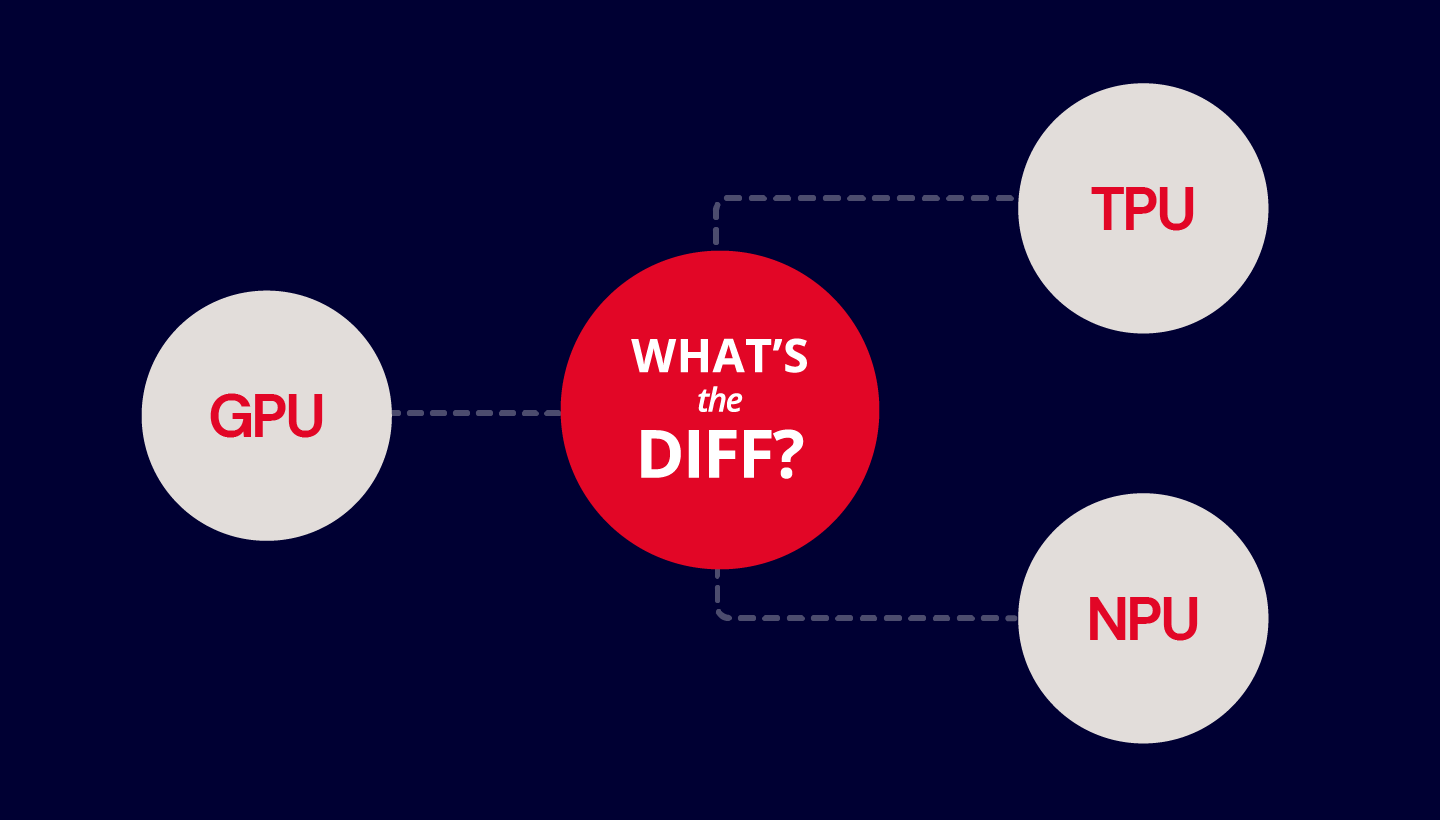
GPUs Remain Central—but Not Alone
GPUs continue to dominate AI training, especially for large language models and multimodal systems. Their strength lies in:
- Massive parallel processing
- Mature software ecosystems
- Flexibility across workloads
However, GPUs are expensive, power-hungry, and increasingly scarce—pushing the market toward alternatives.
Rise of Custom AI Accelerators
In 2025, custom AI accelerators are one of the fastest-growing segments. These chips are designed for:
- Specific AI workloads
- Better performance-per-watt
- Lower long-term operating costs
Cloud providers and large enterprises increasingly design their own AI silicon to reduce dependence on third-party suppliers.
NPUs Bring AI to Everyday Devices
Neural Processing Units (NPUs) have become standard in:
- Laptops
- Smartphones
- Wearables
- IoT and edge devices
NPUs enable on-device AI, reducing latency, improving privacy, and lowering cloud costs. This trend is expanding the AI hardware market far beyond data centers.
Data Centers: Where AI Hardware Demand Explodes
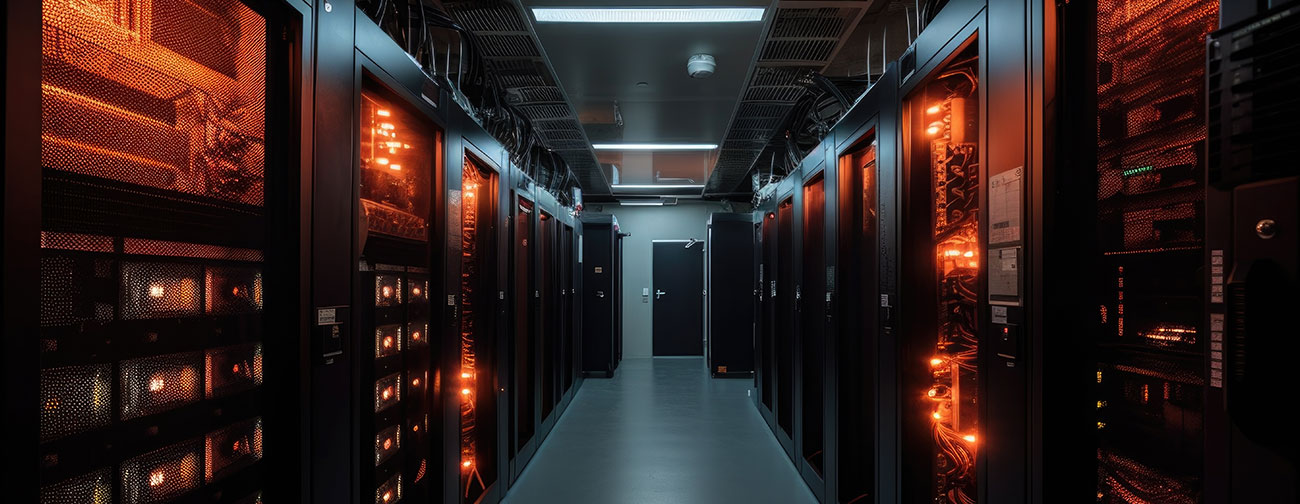
Data centers are the largest consumers of AI hardware in 2025.
Key Data Center Trends
- AI workloads driving new facility builds
- Shift toward AI-optimized server architectures
- Adoption of advanced cooling (liquid, immersion)
- Power availability becoming a limiting factor
AI hardware is now influencing where data centers are built, based on access to energy, cooling, and geopolitical stability.
Memory, Interconnects, and the Hidden Bottlenecks
While chips dominate headlines, AI performance depends heavily on supporting components.
High-Bandwidth Memory (HBM)
AI models require massive memory throughput. HBM has become:
- A critical supply constraint
- A major cost driver
- A key competitive advantage
Networking & Interconnects
Fast interconnects are essential for scaling AI systems across thousands of chips. Hardware for networking is now part of the AI hardware market discussion.
Edge AI and On-Device Intelligence

Not all AI runs in the cloud. In 2025, edge AI is a major growth area.
Why Edge AI Matters
- Lower latency
- Reduced bandwidth usage
- Improved data privacy
- Offline capability
Industries adopting edge AI hardware include:
- Manufacturing
- Healthcare
- Automotive
- Retail
This segment expands the AI hardware market into billions of devices worldwide.
Competitive Landscape: Who Controls AI Hardware in 2025?
The market remains highly concentrated.
Key Competitive Dynamics
- A small number of vendors dominate high-end AI compute
- Cloud providers vertically integrate hardware and software
- New entrants focus on niche workloads or efficiency
While competition is increasing, barriers to entry remain extremely high due to:
- Capital intensity
- Manufacturing complexity
- Software ecosystem requirements
Economic and Geopolitical Forces Shaping the Market
AI hardware in 2025 is deeply influenced by global politics and economics.
Key Factors
- Export controls on advanced chips
- Regional semiconductor investment incentives
- Supply-chain diversification efforts
Governments increasingly view AI hardware as strategic infrastructure, similar to energy or telecommunications.
Challenges Facing the AI Hardware Market
Despite rapid growth, the market faces serious constraints:
1. Power and Energy Limits
AI systems consume enormous amounts of electricity, raising sustainability concerns.
2. Cost and Accessibility
High-end AI hardware remains prohibitively expensive for many organizations.
3. Talent Shortages
Designing, deploying, and optimizing AI hardware requires scarce expertise.
4. Environmental Impact
Manufacturing and operating AI hardware raises carbon footprint concerns.
Market Outlook: Where AI Hardware Goes Next
Looking beyond 2025, several trends are clear:
Expected Developments
- Greater efficiency gains over raw performance
- Wider adoption of domain-specific accelerators
- Continued expansion of edge AI hardware
- Closer integration of hardware, software, and services
AI hardware will increasingly be sold as part of complete platforms, not standalone components.
What This Means for Businesses
For organizations, the AI hardware landscape in 2025 means:
- Hardware strategy is now a business-critical decision
- Long-term planning matters more than short-term performance
- Hybrid approaches (cloud + edge) are becoming standard
Companies that align AI ambitions with realistic hardware strategies gain a sustainable advantage.
What This Means for Professionals
For engineers, IT leaders, and technologists:
- Understanding AI hardware fundamentals is now essential
- Skills in optimization, deployment, and efficiency are in high demand
- Hardware–software collaboration is a career accelerator
AI hardware knowledge is no longer optional—it’s a core professional competency.
FAQs: The State of AI Hardware 2025
1. Is AI hardware demand still growing in 2025?
Yes. Demand continues to grow across cloud, enterprise, and consumer segments.
2. Are GPUs being replaced?
No, but they are increasingly complemented by specialized accelerators.
3. Why is AI hardware so expensive?
Costs stem from advanced manufacturing, memory requirements, and energy demands.
4. Is on-device AI replacing cloud AI?
No. The future is hybrid, with both edge and cloud AI playing key roles.
5. How does regulation affect AI hardware?
Regulation influences supply chains, exports, and investment decisions.
6. Will AI hardware become commoditized?
Parts of it will, but high-end AI compute will remain differentiated for years.
Conclusion: AI Hardware as the Foundation of the AI Era
The State of AI Hardware: 2025 Market Report makes one reality unmistakably clear: AI progress is now inseparable from hardware innovation. In 2025, the race is no longer just about better algorithms—it’s about who can build, deploy, and sustain the infrastructure that makes AI possible.
As demand accelerates, the winners will be those who balance performance, efficiency, cost, and responsibility. AI hardware is no longer behind the scenes—it is the foundation upon which the future of technology is being built.
About the Author