Discover how AI predicts job performance using data analytics, machine learning, and behavioral models. Learn how companies use AI to hire smarter and boost employee success in 2025.
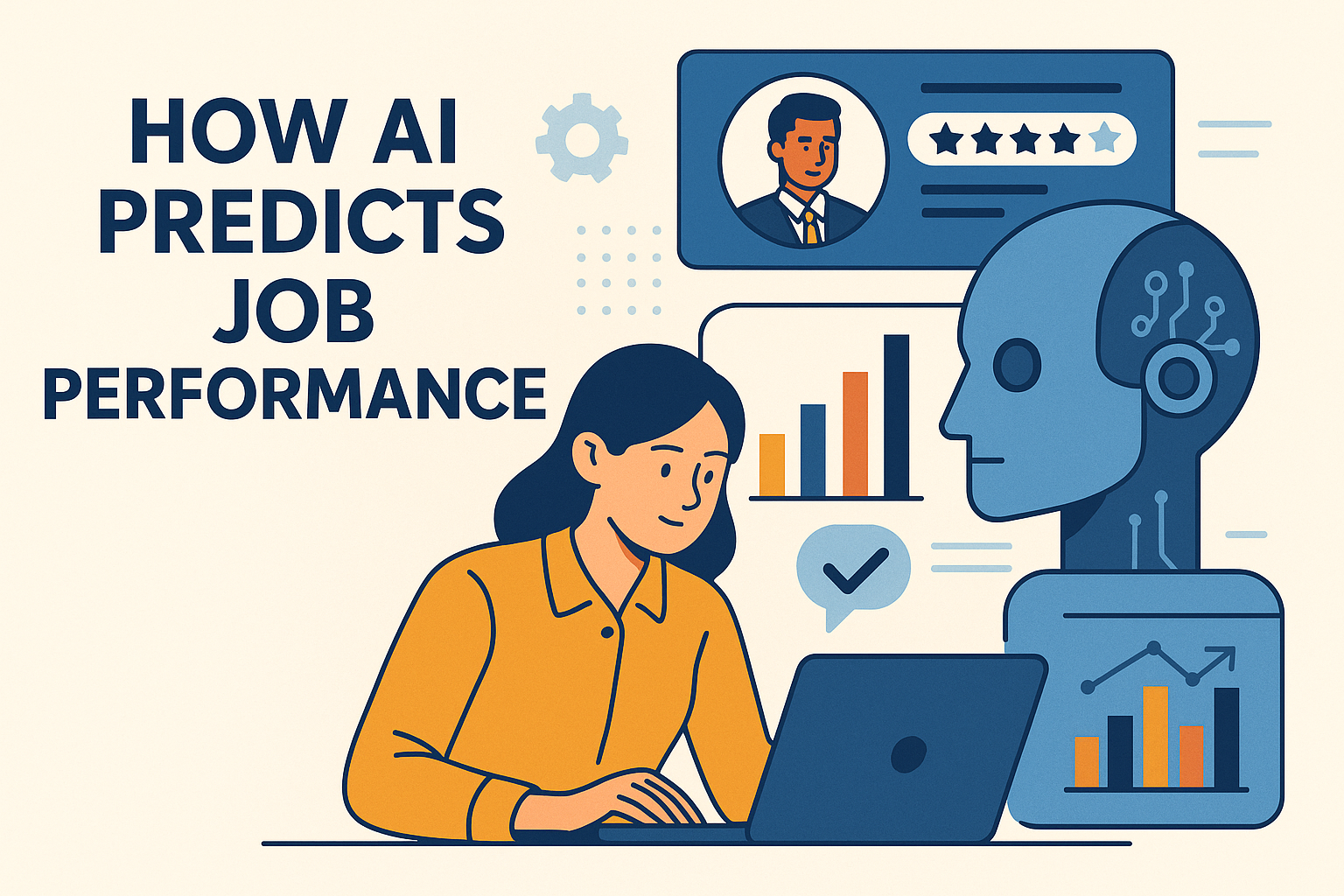
Modern illustration showing an HR professional using AI to analyze job performance data.
Introduction: Why Job Performance Prediction Matters
In today’s competitive job market, hiring the right talent isn’t just about skills—it’s about potential. Companies increasingly rely on AI-driven insights to predict how candidates will perform before they even step into the role. Understanding how AI predicts job performance has become essential for HR professionals aiming to reduce turnover, improve productivity, and ensure fair, data-backed decisions.
AI doesn’t just analyze resumes—it decodes human potential through advanced algorithms, predicting how an employee might handle challenges, communicate, and grow within the organization.
What Does “AI in Job Performance Prediction” Really Mean?
The Evolution of AI in the Workplace
Artificial intelligence has transformed how businesses operate, from automating workflows to improving decision-making. In HR, AI has evolved from simple applicant tracking systems to intelligent predictive engines capable of evaluating performance indicators across vast datasets.
How Predictive Analytics Transformed HR Decision-Making
Predictive analytics uses statistical models and machine learning to analyze patterns in employee behavior, performance, and retention. It helps HR departments anticipate which candidates will thrive, who might struggle, and how to tailor training and incentives for success.

AI system screening job candidates during the recruitment process.
The Science Behind AI Predicting Job Success
Data Collection: Behavioral, Cognitive, and Emotional Indicators
AI systems analyze multiple data points—from psychometric tests, interview transcripts, and even digital communication patterns. For instance, how a candidate writes emails or responds to problem-solving scenarios can reveal cognitive agility and emotional intelligence.
Algorithms and Machine Learning Models Used in Prediction
Machine learning models, such as random forests, neural networks, and regression algorithms, process this data to detect performance-related patterns. These models are trained on historical data of high-performing employees to identify traits linked to success.
Natural Language Processing (NLP) in Candidate Evaluation
NLP technology interprets tone, sentiment, and linguistic complexity in speech or writing. This helps recruiters gauge communication style, empathy, and professionalism—key predictors of workplace success.
Real-World Applications: How Companies Use AI to Predict Employee Performance
Pre-Employment Assessments and AI-Based Screening
AI-powered platforms like HireVue and Pymetrics use gamified tests and video interviews analyzed by machine learning to predict how candidates might perform in real roles.
Continuous Performance Tracking and Predictive Coaching
Post-hiring, AI systems monitor productivity metrics and feedback loops to identify potential performance dips early. This enables managers to offer timely support or personalized coaching.
Case Studies: How Global Brands Use AI in Talent Analytics
- Unilever uses AI to screen candidates, reducing hiring time by 75%.
- IBM Watson predicts employee turnover risk with 95% accuracy.
- Google’s People Analytics identifies leadership potential through behavioral data.
These examples showcase how AI transforms traditional hiring into a strategic, data-driven science.
Ethical and Legal Challenges in AI-Driven Hiring
Bias in Algorithms and Fairness in Recruitment
AI models can unintentionally amplify biases if trained on biased historical data. For example, if past hiring favored a particular demographic, AI might replicate that trend. To combat this, companies must use bias-auditing tools and diverse datasets.
Data Privacy and Transparency Concerns
Employee data must be handled ethically. Regulations like GDPR and EEOC emphasize transparent AI usage, ensuring that candidates understand how their data influences hiring outcomes.
The Future of Work: Can AI Replace Traditional HR Judgment?
Balancing Human Intuition with Artificial Intelligence
While AI can process data faster than any human, empathy, ethics, and contextual understanding remain human strengths. The ideal HR ecosystem combines AI insights with human wisdom to make balanced, fair decisions.
The Rise of Explainable AI (XAI) in HR Decisions
Explainable AI provides transparency by showing how algorithms reach their conclusions. This builds trust and ensures accountability in talent assessments.

AI and human working together to assess candidates.
Benefits and Limitations of AI in Predicting Job Performance
Key Advantages for Organizations
- Faster, bias-reduced hiring decisions
- Improved retention and performance forecasting
- Enhanced workforce planning and talent matching
Potential Drawbacks and Risks
- Data dependency and algorithmic errors
- Ethical concerns about surveillance or profiling
- Reduced human judgment in nuanced decisions
Best Practices for Implementing AI-Powered Performance Prediction Systems
Data Quality and Algorithm Transparency
AI predictions are only as reliable as the data they’re trained on. Companies should ensure diverse, unbiased datasets and audit models regularly for fairness.
Training HR Teams to Interpret AI Insights
HR professionals need training to understand and interpret AI reports effectively. Blending AI literacy with human empathy leads to the best hiring outcomes.
FAQs About How AI Predicts Job Performance
1. How accurate is AI in predicting job performance?
AI models can reach 85–95% accuracy when trained on high-quality, unbiased data. However, human oversight remains crucial.
2. Can AI eliminate bias in hiring?
AI reduces bias but cannot completely eliminate it unless its training data is ethically curated.
3. What types of data does AI analyze for job performance?
It uses behavioral, linguistic, cognitive, and emotional indicators to predict potential success.
4. Is it legal to use AI for hiring decisions?
Yes, provided it complies with labor laws and privacy standards like GDPR and EEOC.
5. Can AI predict leadership potential?
Yes, advanced models can detect patterns in communication and decision-making that correlate with leadership ability.
6. Will AI replace HR professionals?
No—AI assists HR professionals by providing data-backed insights, while humans make the final judgment calls.
Conclusion: The Human-AI Partnership for Smarter Workplaces
AI is reshaping how companies understand and optimize talent. By combining machine precision with human intuition, businesses can build teams that perform better, stay longer, and adapt faster. As AI continues to evolve, the future of hiring will be predictive, personalized, and profoundly human.
Learn more about ethical AI in hiring from the World Economic Forum’s AI and HR Initiative.
About the Author